
By Heritage Craft Center ·
Buddha Mudras Explained: Meaning, Symbolism, and How to Choose a Buddha Statue
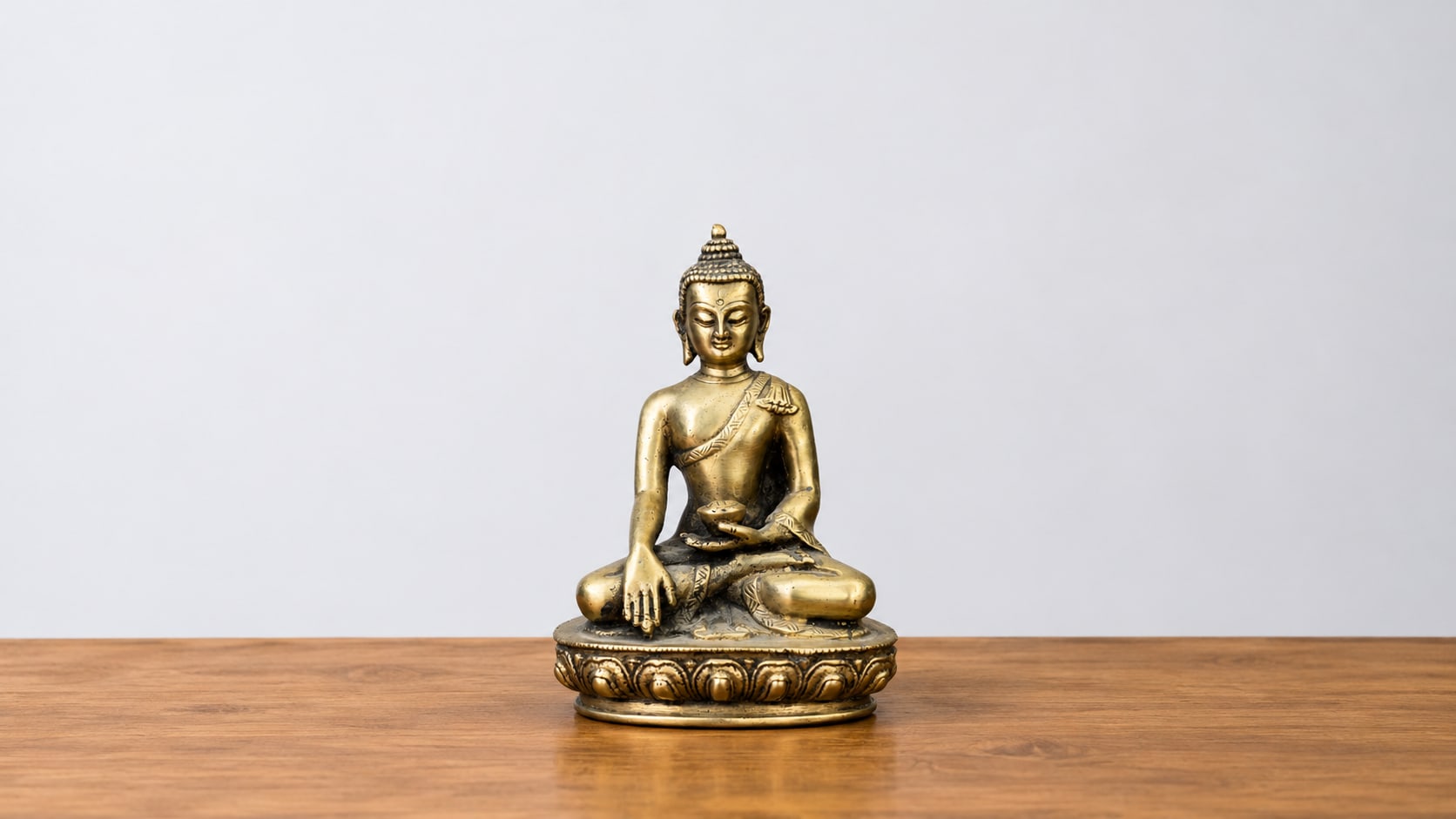
Buddha mudras are the fixed hand gestures seen in Buddhist sculpture and painting, and they are the quickest way to understand what a statue is saying. Two figures can share the same robe, the same seat, and the same calm face, yet carry different meanings because their hands differ. Once you know how to read the hands, a statue stops being a general symbol of peace and becomes a specific teaching or a specific moment.
This guide explains the main mudras, the stories behind them, how statues are cast, and how to choose and care for one at home.
What Buddha Mudras Are and Why They Matter
A mudra is a fixed hand gesture. In Buddhist art, each one signals a particular teaching, quality, or moment from the Buddha's life. The word comes from Sanskrit and is used across Buddhist and Hindu traditions, and in Indian dance and yoga as well. In sculpture, the meaning is carried by the position of the hands and fingers.
Mudras are read from the hands, not from the pose of the body alone. A statue with a serene face and crossed legs tells you little until you see where the hands are. The right hand raised, pointing down, or resting in the lap each gives a different reading.
Mudra and asana are not the same thing
Readers often mix up two terms. A mudra is the gesture of the hands. An asana is the posture of the body, such as sitting cross-legged in the lotus position, sitting with one leg pendant, or standing.
So "a seated Buddha" describes the asana, and "a Buddha in bhumisparsha mudra" describes the hands. A full description uses both. For example: a seated figure in lotus posture, with the right hand touching the ground.
Keeping the two terms apart makes it easier to ask a shop the right questions. It also keeps you from saying a statue "has the meditation pose" when you mean it shows the meditation mudra. Buddha mudras are a smaller, more precise vocabulary than posture, and they are worth learning for that reason.
The Most Common Buddha Mudras and Their Meanings
Many gestures appear in Buddhist art across Asia, and some are specific to certain schools or Buddha figures. Four of them account for most of the statues you will meet in shops and temples.
Abhaya mudra
In abhaya mudra, the right hand is raised to about shoulder height, with the palm facing outward and the fingers pointing up. The name means "fearlessness." The gesture offers reassurance and protection, and it says that the viewer has nothing to fear.
It is common on standing figures, though it also appears on seated ones.
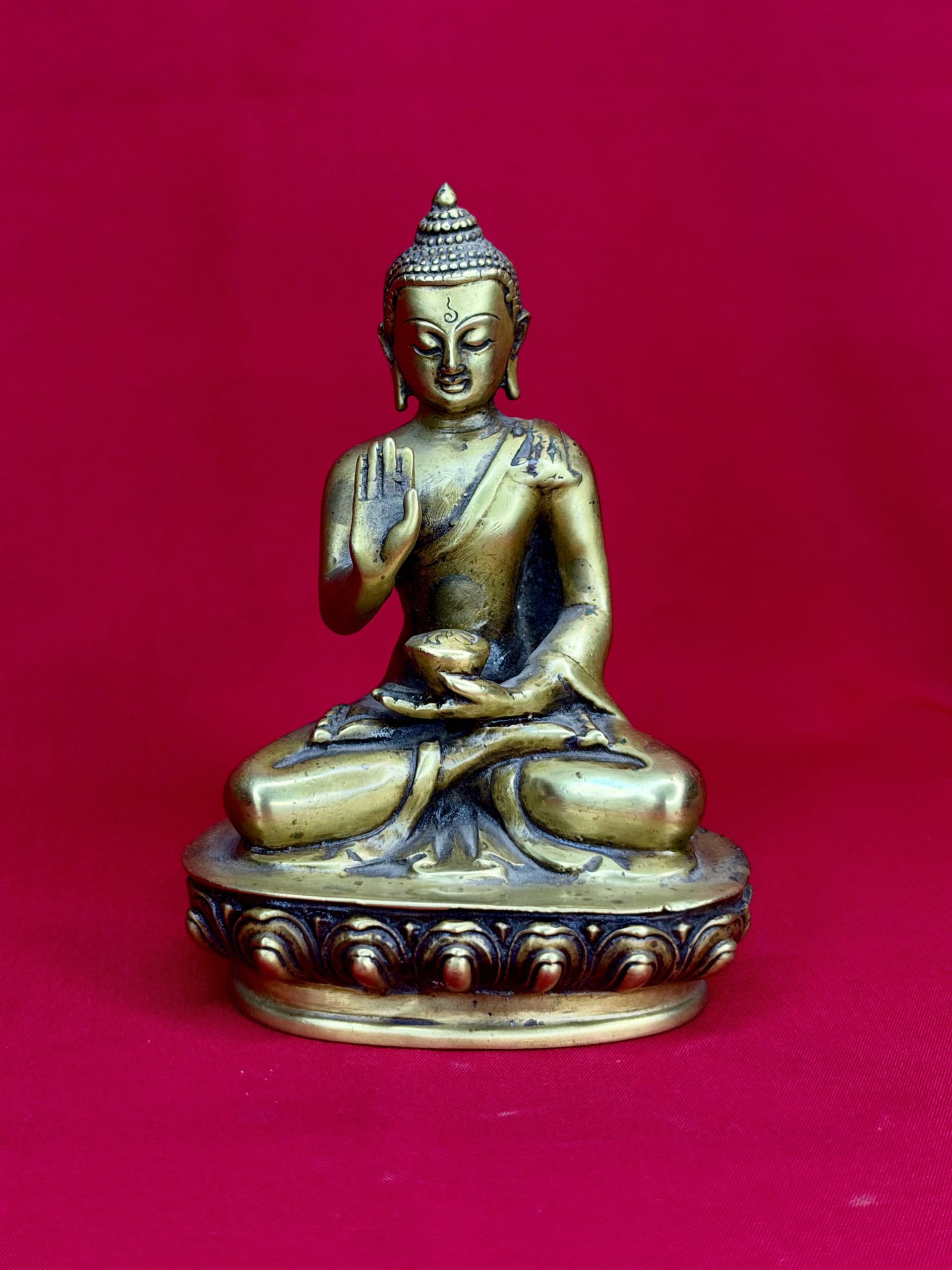
See this piece: Abhaya Mudra Buddha.
Bhumisparsha mudra
In bhumisparsha mudra, the right hand reaches down over the right knee, with the fingers pointing toward the ground. The left hand usually rests open in the lap. The name means "touching the earth," and the gesture recalls the moment of enlightenment, when the Buddha called the earth to witness.
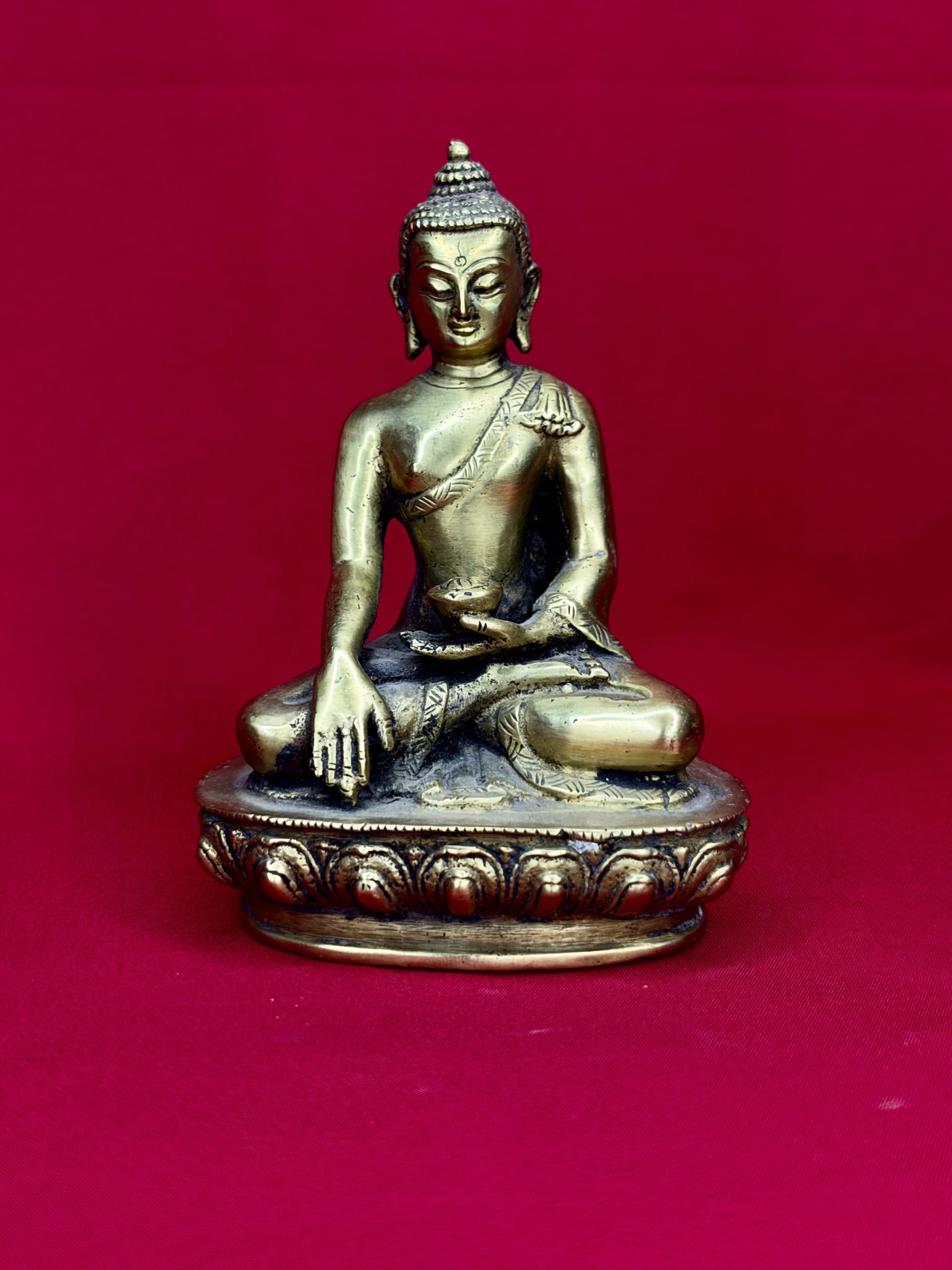
See this piece: Bhumisparsha Mudra Buddha.
It is among the most recognizable of all Buddha mudras, and it is closely tied to Shakyamuni, the historical Buddha.
Varada mudra and dhyana mudra
In varada mudra, the right arm is lowered and the open palm faces outward, with the fingers pointing down. It is the gesture of giving and of granting wishes. It often appears together with another mudra in the other hand, and on standing figures the two are frequently combined.
In dhyana mudra, both hands rest in the lap, palms up, with the right hand placed over the left. The thumbs often touch to form a small triangle. This is the gesture of meditation and concentration.
One figure, different mudras
A mudra is identified by the hands alone. The same seated figure, with the same robe and the same base, can show bhumisparsha mudra in one casting and dhyana mudra in another. Only the position of the arms and fingers changes.
When you look at a statue, check the hands before anything else. Do not assume that a seated Buddha is a meditating Buddha.
How Buddha Mudras Connect to the Life of the Buddha
Many mudras are visual shorthand for a story. Knowing the story explains why the gesture looks the way it does.
Bhumisparsha and the bodhi tree
According to the traditional account, Siddhartha Gautama sat beneath the bodhi tree at Bodh Gaya, resolved not to rise until he understood the cause of suffering, and the earth-touching gesture is tied to that moment. Mara, the figure who represents temptation and doubt, challenged his right to be there. The Buddha did not argue. He reached down with his right hand and touched the ground.
The earth, personified in Buddhist art as a goddess, answered as witness to his many lifetimes of generosity and discipline, which is why the hand symbolizes that witness in the gesture. That is why the right hand points down in bhumisparsha mudra. The gesture means that the earth itself can confirm what happened.
Abhaya as protection and calm
Abhaya mudra is linked to protection and calm. Some traditions connect it to the story of the Buddha calming a charging elephant, though the gesture is also understood more broadly as a statement of safety.
On some seated figures, the raised right hand is paired with a left hand resting in the lap, sometimes holding an alms bowl. The pairing joins two ideas: protection offered outward, and the simplicity of a monk's life.
Varada as generosity
Varada mudra expresses generosity, which is one of the core qualities taught in Buddhism. The open, lowered palm shows a hand that gives rather than grasps. It is less tied to a single event than the other two gestures, and it reads more as a teaching quality.
That quality is also why varada often appears alongside abhaya. One hand offers protection, and the other offers help.
Reading the Symbolism of Buddha Statues: Lotus Bases and Other Details
The hands carry the main message, but the rest of the statue adds to it. Reading these details in the right order helps you avoid over-interpreting any one of them.
The lotus base
Many Buddha statues sit on a lotus base, usually shown as two rows of petals. The lotus grows from mud, rises through water, and opens clean above the surface. In Buddhist teaching, this stands for purity and awakening arising from the ordinary world of difficulty.
Petals that face upward are the common form, and they give the figure a stable, raised seat. The base also has a practical benefit, since it lifts the figure and gives the casting a solid foundation.
Robe, halo, and posture
The robe, the halo, and the posture support the mudra instead of replacing it. A monastic robe with folds falling over the shoulder points to the Buddha as a teacher and renunciant. A flame or disc behind the head marks radiance. An upright, balanced posture signals steadiness.
None of these changes the mudra. A halo does not turn abhaya mudra into something else, and a different robe style does not alter what the hands say.
A simple reading order
When you look at a statue, read it in this order:
- The hands, to identify the mudra.
- The body posture, to name the asana.
- The base, to see what the figure rests on.
- The finish, to see how the surface was treated.
This order keeps the mudra as the anchor. The other details then add context rather than competing with it.
How Buddha Statues Are Made: Lost-Wax Casting and Hand Finishing
Most fine metal Buddha figures from the Kathmandu Valley are made by lost-wax casting, an old method that suits small, detailed forms. It is called "lost-wax" because the wax model is destroyed in the process.
The lost-wax method, step by step
- Wax model. The artisan shapes the figure in wax, including the hands, folds of the robe, and facial features. Fine detail is built in at this stage.
- Clay investment. The wax model is coated in layers of clay. The clay dries into a hard shell that holds the exact form of the model on its inside surface. A small channel is left open.
- Melting out the wax. The mold is heated, and the wax melts and runs out through the channel. This leaves a hollow space in the shape of the figure.
- Pouring the metal. Molten metal, usually brass or a bronze-type alloy, is poured into the hollow. It fills every part of the space and cools.
- Breaking the mold. The clay shell is broken away to reveal the rough casting.
Because the mold is broken each time, a piece made this way is effectively unique, even when it follows a familiar design.
Hand-chasing and finishing
A raw casting is not a finished statue. The artisan removes the channels, then works the surface with chisels, files, and punches. This is called chasing. It sharpens the fingers, defines the hand position, and cleans the lines of the face and robe.
This stage matters most for mudras. A mudra depends on clear fingers and a clear angle of the wrist, and these are refined by hand. After chasing, the piece is polished, and it may be painted or finished in other ways.
Why sizes vary slightly
Each handmade piece is measured and finished by hand, so weight and height vary slightly from one statue to the next. Two figures from the same design can differ by 10 to 20 g in weight and 0.2 to 0.3 in in height. That is a normal result of hand casting and finishing, not a flaw. It is also a reason to ask for exact figures on the piece you are buying.
Choosing a Buddha Statue by Mudra and Purpose
Start with what you want the statue to do in your space. Then choose the mudra that fits.
Match the mudra to the purpose
- Abhaya mudra suits an entrance, hallway, or shelf near a door, where a calm and protective presence is welcome.
- Bhumisparsha mudra suits a focus for grounding. It works well on a desk or a quiet shelf where you want a figure that suggests steadiness and resolve.
- Dhyana mudra suits a meditation corner or a prayer room, since the gesture itself is about concentration.
These are suggestions, not rules. Plenty of people choose a figure simply because they like its meaning.
At Heritage Craft Center in Bhaktapur, you can look at the Bhumisparsha Mudra Buddha and the Abhaya Mudra Buddha. You can also browse all the metal statues, or contact the shop on WhatsApp to confirm which mudra a piece shows before you decide.
Compare size and scale
Size affects where a statue can stand. A 5 inch standing figure is slim and works on a narrow ledge, a windowsill, or a small shelf. A 5.5 inch seated figure is only slightly taller, but a seated form is wider and more compact, so it feels more solid on a table or altar.
Measure the space first, including the depth. A standing figure needs less depth, while a seated figure on a lotus base needs a wider, flatter surface.
Check finish and material
Gold-painted pieces have a bright, warm surface. Darker or bronze-toned finishes look quieter and show more of the metal's character. Neither is better. The right choice depends on the room and the light.
Ask what the finish is and how it was applied, since painted surfaces and metal surfaces need different care. Material matters too. Brass and bronze-type alloys are both common, and they age differently.
Buying a Handmade Buddha Statue: Questions to Ask
Buying a statue is straightforward if you ask clear questions first. Photos show shape and color, but they do not show weight, scale, or surface quality.
Questions to ask before buying
- What is the exact height, and what is the exact weight?
- What is the finish, and is it painted, polished, or patinated?
- Which mudra does the statue show?
- Is the piece cast or stamped? Ask whether it was made by lost-wax casting and finished by hand.
- What metal is it made of?
- Are there any marks, repairs, or variations I should expect?
The cast-or-stamped question is the most useful. Stamped pieces are pressed from thin sheet and tend to look flatter, with softer detail in the fingers. Cast and hand-chased pieces have more depth in the hands, and that depth is what makes the mudra readable.
Caring for Brass and Bronze Buddha Statues at Home
Brass and bronze are durable, and a statue needs very little care. The aim is to keep the surface as it is, not to restore it to a mirror shine.
Dust gently
Use a soft dry cloth to wipe the surface. A soft brush, such as a clean paintbrush, reaches the folds of the robe and the spaces between fingers, where dust collects.
Avoid harsh chemical cleaners, abrasive pads, and strong acids. They can strip the patina, which is the darkened layer that gives the metal depth. They can also damage painted areas, especially the face and the gold finish.
Choose the right place
Place the statue away from direct sun, which can fade painted surfaces over time. Keep it away from damp areas such as bathrooms or kitchens, where humidity encourages tarnish and green spots.
Keep it away from open flame as well. A nearby candle or incense burner can leave soot, and wax drips are hard to remove from detailed hands.
Polish only where needed
If an area becomes dull or marked, polish it gently and only that area. Use a soft cloth with a very small amount of a mild metal polish made for brass, and test it first on a hidden spot such as the underside of the base.
Do not polish gold-painted surfaces, since the polish will lift the paint. Work lightly around the hands and face. Heavy rubbing wears down the fine detail that defines the mudra, and it cannot be put back.
FAQ
What is the difference between a mudra and an asana in Buddha statues?
A mudra is the gesture of the hands. An asana is the posture of the body, such as sitting in lotus position or standing. A statue has both, and they are described separately. For example, a seated figure can show bhumisparsha mudra, and a standing figure can show abhaya mudra.
Which Buddha mudra is most common in meditation spaces?
Dhyana mudra is the most direct match, because it is the gesture of meditation, with both hands resting in the lap. Many people also place bhumisparsha mudra figures in meditation spaces, since it is among the most widely recognized of the Buddha mudras and suggests steadiness.
How can I tell which mudra a Buddha statue is showing?
Look at the hands first. A raised right hand with the palm out is abhaya mudra. A right hand reaching down over the knee is bhumisparsha mudra. A lowered right palm facing out is varada mudra. Two hands resting together in the lap, palms up, is dhyana mudra. Ignore the seat and robe until you have identified the hands.
Does the mudra change the meaning of a Buddha statue at home?
Yes. The mudra gives the statue its specific meaning, such as protection, grounding, generosity, or meditation. The base, robe, and halo add context but do not replace it. Choosing a statue by its mudra means choosing the message you want it to carry.
What should I check before buying a handmade Buddha statue online?
Ask for the exact height and weight, the finish, the metal, and the mudra shown. Ask whether it is cast or stamped, and request the price directly.
Key Takeaways
- A mudra is a hand gesture, and it is read from the hands first.
- Abhaya mudra signals reassurance, and bhumisparsha mudra recalls the enlightenment moment.
- Lost-wax casting and hand finishing give each statue its detail and slight size variation.
- Ask for the exact height, weight, finish, and price before buying.
- Clean brass and bronze gently to protect the finish and the hand details.