
By Heritage Craft Center ·
Nepali Oil Lamp Tradition: Meaning, Craft, and How to Choose a Lamp
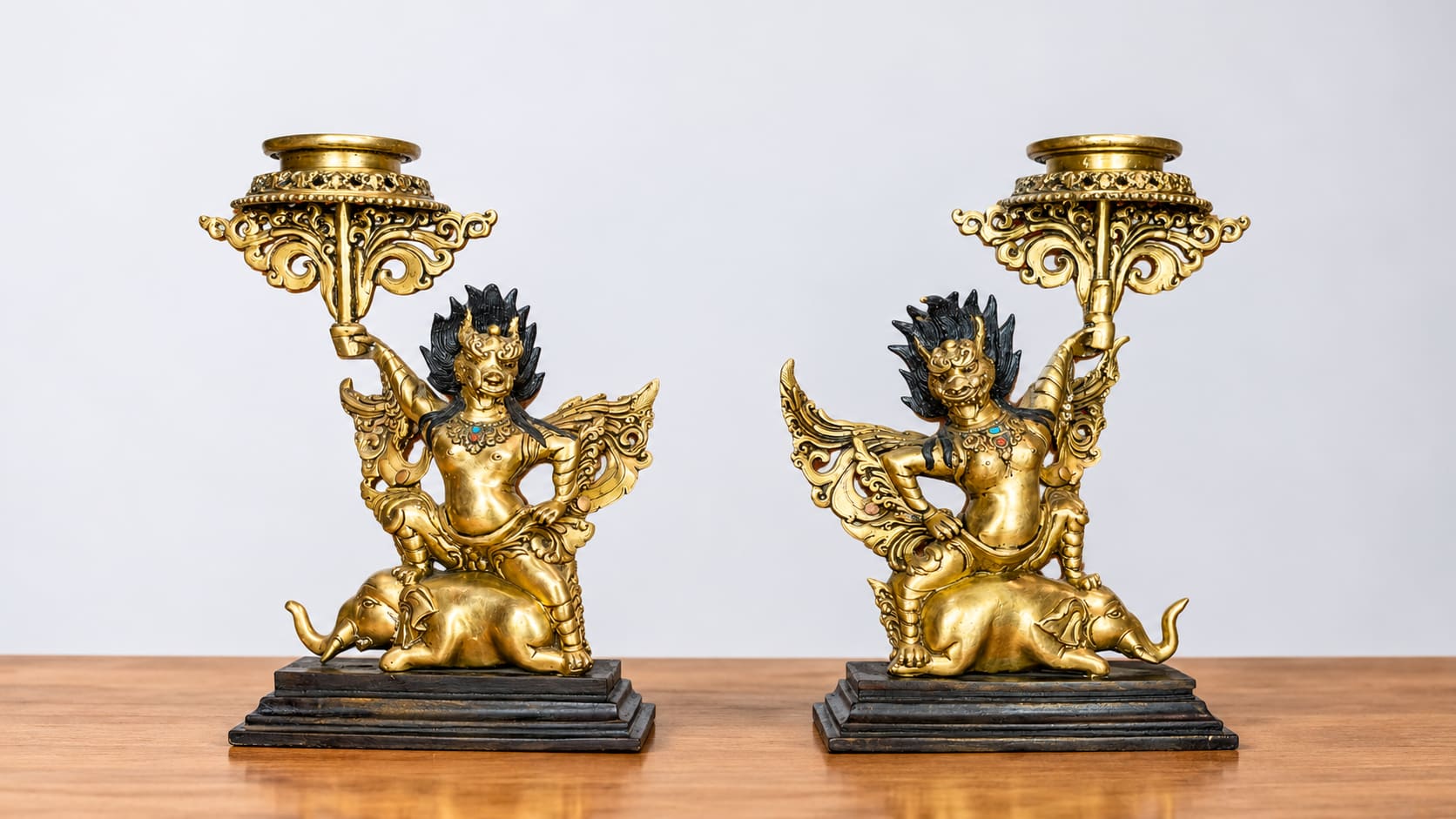
The Nepali oil lamp tradition is one of the quiet constants of life in the Kathmandu Valley. A flame is lit at dawn at a household shrine, at a temple doorway, or beside an offering during a festival. The lamp that holds it is usually metal, and it is usually made by hand.
A lamp is a simple object. How it is cast, hammered, decorated, and finished still tells you where it comes from and how it is meant to be used, whether it is a plain oil lantern for everyday use or a finished brass piece for a shrine.
What the Nepali Oil Lamp Tradition Is and Where It Comes From
Oil lamps in Nepal appear in three main settings: household worship, temple ritual, and festivals. Many homes light a lamp in the morning or evening in front of a deity image. Temples keep lamps burning through the day, and worshippers add their own as offerings. During Tihar, the festival of lights, lamps line doorways and windows.
The fuel is most often mustard oil, and ghee is used in some rituals. Clear glass and kerosene lamps are rarely part of this tradition, which relies on metal. The wick is cotton, usually rolled by hand. The Nepali oil lamp tradition is built around this simple pairing of oil and flame, and the metalwork around it has grown more elaborate over time.
The valley's old cities, Kathmandu, Patan, and Bhaktapur, have long made and used metal lamps. Newar craftspeople are closely associated with this work, and Bhaktapur is known for its metalwork, woodcarving, and pottery. Lamps were made close to the temples and homes where they would be used.
The basic form
A traditional brass or bronze oil lamp is a shallow bowl or dish that holds oil and a wick. The shallow shape gives the flame a wide surface of oil to draw from. The wick rests on the rim or in a small spout.
Many lamps sit on a stand or a footed base. The panus is one example: a tall stand with a shallow dish on top.
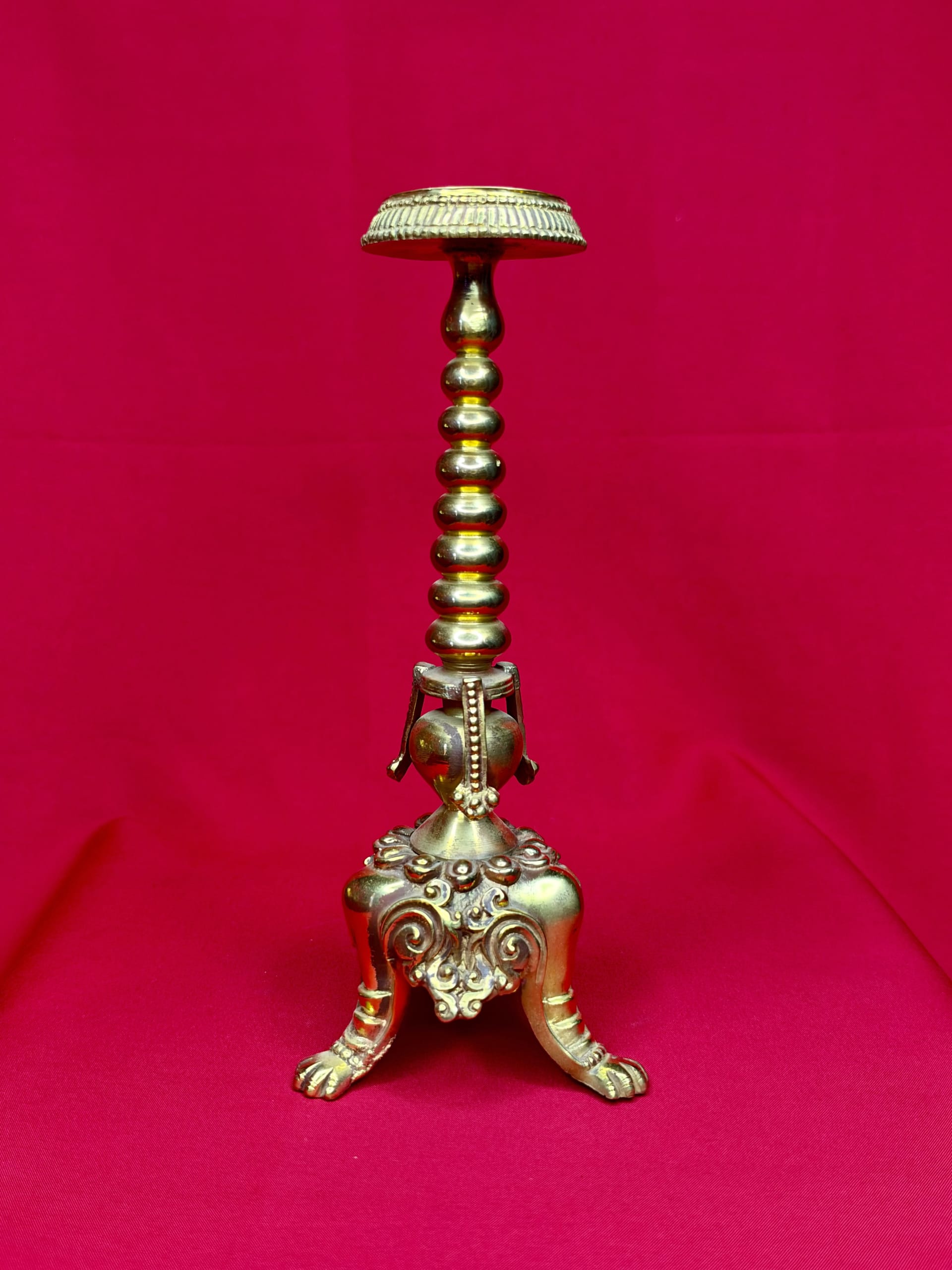
See this piece: Panus (Dwarwa).
Others have a decorated rim, a handle, or several wick points. The Newar sukunda, a lamp with a hollow oil pot and a small wick dish at the front, is a well-known example from the valley.
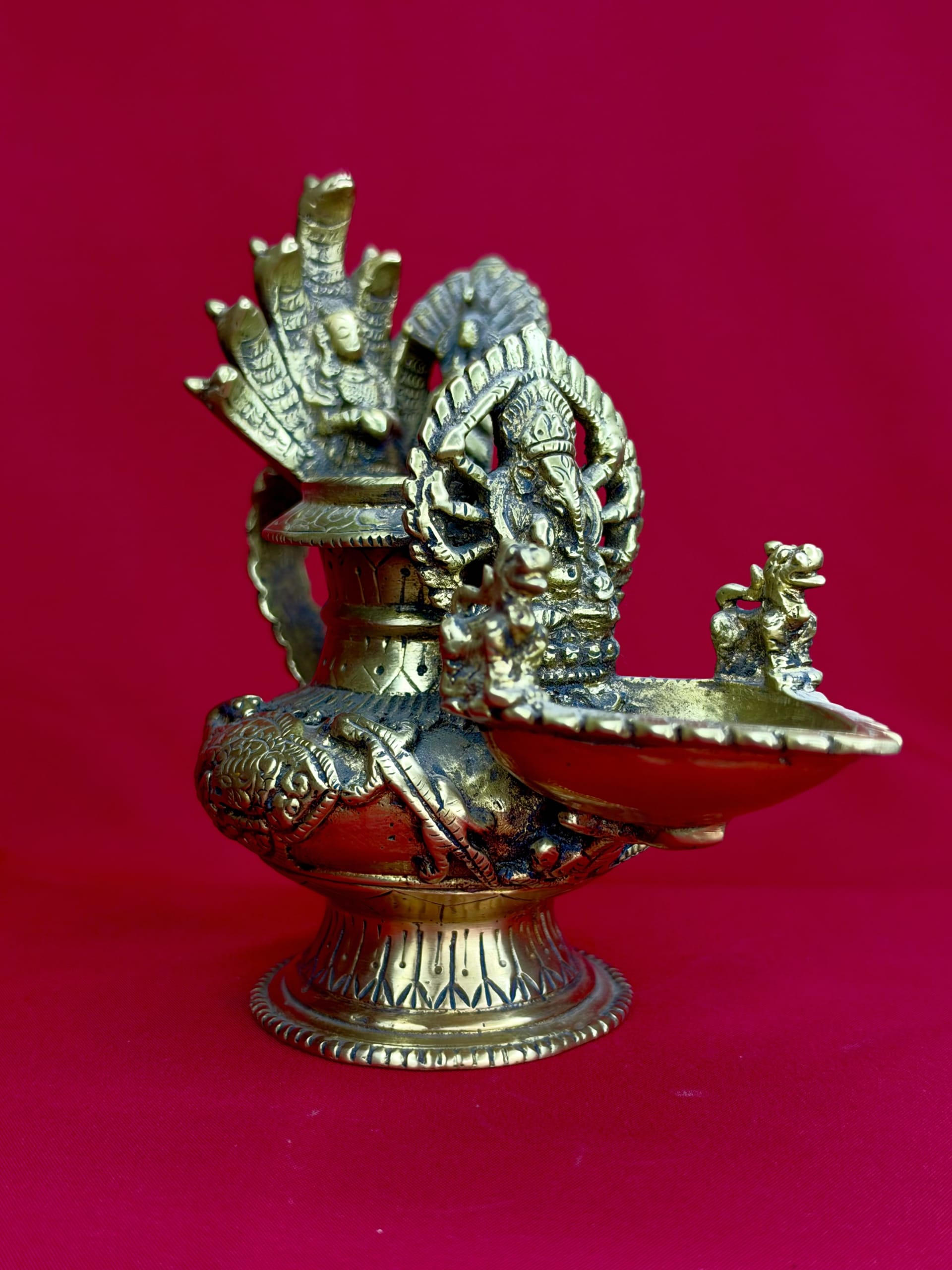
See this piece: Sukunda with Serpent-Hood Handle.
Household lamps and ritual lamps
Everyday household lamps are usually plain and sturdy. They are easy to clean, easy to refill, and often handed down within a family. A plain dish on a small base does the job.
Lamps made for shrines usually carry more detail: figures, pedestals, engraved bands, and worked rims. They are seen up close during worship, and they are often given to a temple to last for generations. The difference is mostly time at the bench, not the purpose of the flame.
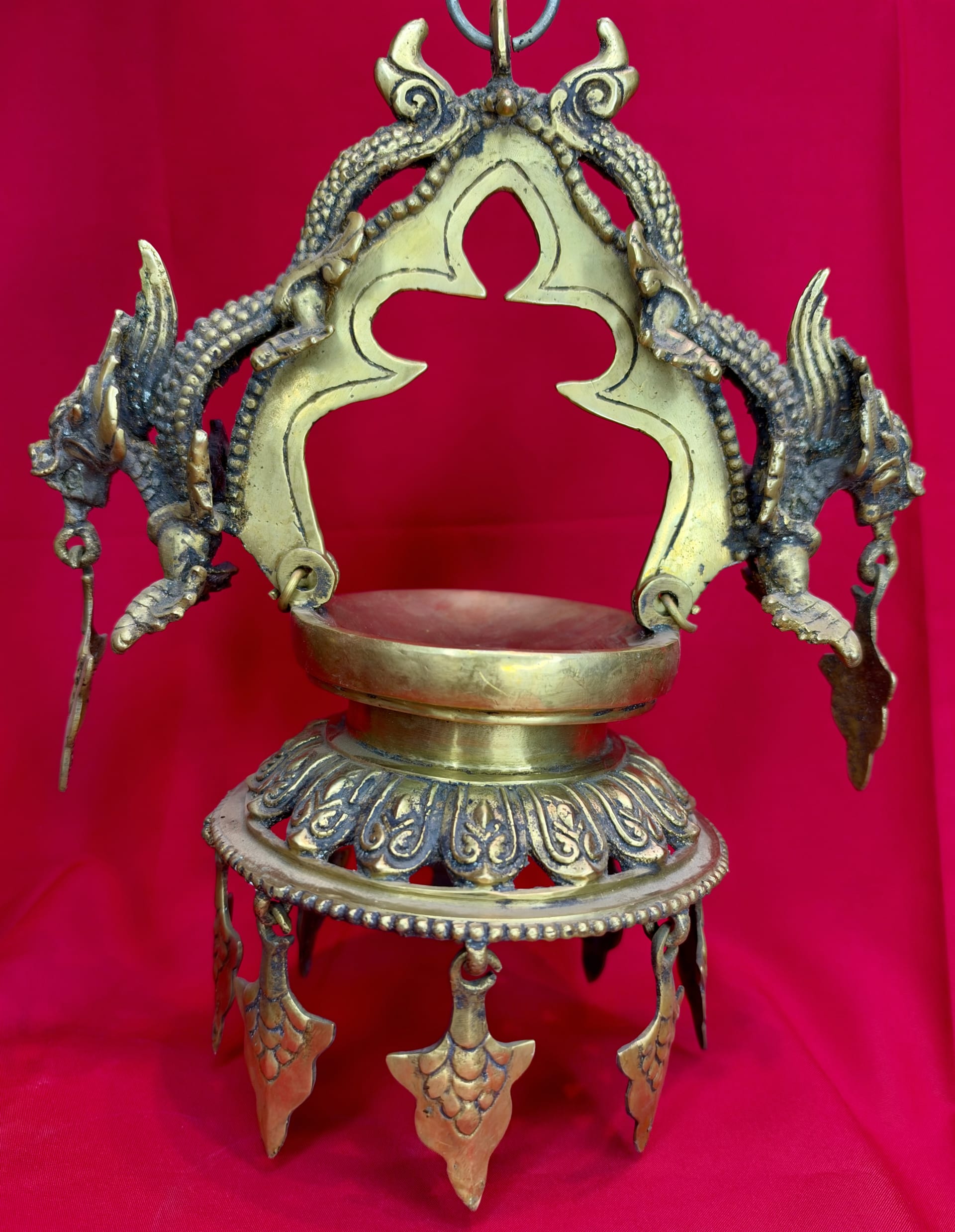
See this piece: Dalucha (Hanging Oil Lamp).
How Traditional Metal Oil Lamps Are Made
The Nepali oil lamp tradition rests on a small set of metalworking methods. Which one a maker uses depends on the shape of the lamp. Solid or figurative pieces are cast, and bowls and dishes are often hammered from sheet. Decoration is added by hand.
Lost-wax casting
Lost-wax casting suits lamp stands with figures, deep relief, or complex shapes. The steps are these:
- Wax model. The maker sculpts the lamp or stand in wax, including every detail that will appear in the metal.
- Clay mould. The model is coated in layers of fine clay, then a coarser clay, and left to dry into a solid shell.
- Melting out the wax. The mould is heated. The wax runs out through a channel and leaves a hollow in the exact shape of the model.
- Pouring. Molten brass or bronze is poured into the hollow and left to cool.
- Breaking the mould. The clay is broken away to reveal the rough casting.
Because the mould is destroyed each time, every cast piece is in a real sense a one-off. After casting, the maker removes the channels, files and chases the surface, and polishes it.
Hand-hammering
Bowls and dishes are often shaped from flat sheet. The metal is hammered over a form, then worked again and again until it reaches the right depth. Metal hardens as it is hammered, so it is usually heated and cooled between stages to keep it workable.
A hammered piece has a different character from a cast one. Its walls are thinner and may vary slightly, and faint hammer facets often show on the surface. A cast piece has a more uniform wall and a smoother, denser feel.
Repoussé and engraving
Repoussé raises a pattern from the back of the metal. The sheet is held on a bed of pitch and worked with punches and small hammers so the design swells outward. The maker then turns the piece over and refines the raised shapes from the front, which is called chasing.
Engraving cuts lines into the surface with chisels and gravers. Together, the two techniques produce petal bands, borders, and fine linework on the rim and body. Both are finished by hand, with edges cleaned and the surface polished or darkened as the design requires.
Symbolism in Lamp Designs: Motifs and Their Meanings
Decoration within the Nepali oil lamp tradition is rarely random. Each motif points to an idea the lamp is meant to hold in front of the worshipper.
- Lotus. The lotus grows from mud and opens clean, so it stands for purity. Lotus petals also form the seat of many deities, which is why petal bands often ring a lamp's base or rim.
- Ganesh. Ganesh is the remover of obstacles and is invoked at the start of any undertaking. A Ganesh figure on a lamp suits a beginning, such as a new home, a new venture, or a daily prayer.
- Vajra. The vajra is a thunderbolt and diamond symbol of indestructibility, important in Vajrayana Buddhism. On a lamp it suggests steadiness and resolve.
The flame itself carries meaning as well. Light dispelling darkness is one of the most widely shared ideas in Nepali religious practice, Hindu and Buddhist alike.
Figurative stands and plain dishes
A lamp with a figure, tiered base, and engraved bands is usually made for a shrine or a prominent altar. It is meant to be looked at as well as used. Its decoration marks the space as a place of worship. The Lion Oil Lamp and the Tara Butter Lamp are two examples of this kind of lamp. Our butter lamp guide looks at the Tara lamp and other butter lamps more closely.
A plain dish is made for repeated, ordinary use. It may sit on a home altar, beside a doorway, or on a windowsill. Both are valid, and the choice depends on where the lamp will stand and how it will be handled.
Meanings vary
Interpretations differ by family, temple, and region. A motif that means one thing to a Newar Buddhist household may be read differently elsewhere. If the symbolism matters to you, ask the maker or seller before assuming a fixed meaning.
Materials and Finishes: Brass, Bronze, and Copper
Brass is copper alloyed with zinc. Bronze is copper alloyed with tin. Both are used throughout the Nepali oil lamp tradition, and the difference is easiest to see in colour.
Brass is a warm golden yellow when polished. Bronze is browner and sometimes a little redder. Their weights are similar, so weight alone will not tell you which is which.
How each metal ages
Both metals darken with handling and oil smoke. Fingers leave natural oils, and a burning lamp deposits a thin film of soot around the rim. Brass tends to dull to a brown tone and can show green spots when damp. Bronze usually settles into a deeper, richer brown.
Pure copper, which is redder than either alloy, tarnishes quickly. You will see it in some ritual vessels, but brass and bronze are more common for lamps.
Polish, oxidation, and applied finishes
A bright polish gives a mirror-like surface that shows every fingerprint. A matte or brushed finish is calmer and easier to live with. Many makers also darken the recesses of engraved or cast detail so the pattern stands out against the raised surface.
Deliberate patina and neglect look different:
- Deliberate patina is even, smooth, and follows the design. It is darker in the recesses and consistent across the piece.
- Neglect is patchy and uneven. It shows crusty or powdery spots, sticky residue, and green deposits that ignore the pattern.
Checking the metal
A few quick checks tell you a lot.
- Weight. A lamp should feel solid for its size. Compare it with another lamp of similar dimensions.
- Magnet. Brass and bronze are not magnetic. If a magnet sticks firmly, the piece is plated iron or steel.
- Seams. Where a bowl joins a stand, the joint should be clean, with no gaps, cracks, or lumps of excess solder.
- Wall thickness. Look at the rim and run a finger around it. Tap gently. A clear ring suggests sound, even metal, and a dull thud can point to cracks or uneven thickness.
- Stability. Set the lamp on a flat surface. It should not rock.
Caring for Brass and Bronze Lamps Over Time
Caring for a lamp is part of the Nepali oil lamp tradition. In many households, brass and bronze are cleaned before major festivals. The method matters more than the effort.
Gentle cleaning
Use warm water, a few drops of mild soap, and a soft cloth. Wipe the surface, rinse with clean water, and dry fully with a second cloth. This removes handling marks and light grime without harming the metal.
Avoid abrasive pads and harsh scouring powders. They scratch the surface and can wear down engraved and repoussé areas, where the pattern is only slightly raised or cut. A soft brush, such as an old toothbrush, works well for crevices.
Oil residue and soot
Old oil turns sticky and traps soot. Soak the lamp briefly in warm, soapy water to soften it, then wipe it away. Repeat if needed before reaching for anything stronger.
Dark soot around the rim usually lifts with soap and a soft brush. Do not chase every dark patch. If the lamp has a hand-applied finish, aggressive polishing strips it, and the colour will not come back in the same way. Polish only plain areas, and only when you want a brighter look.
Some households use tamarind or lemon with salt on brass. It works, but it is acidic and can remove darkened finishes or leave the metal uneven. Use it only on plain, fully polished pieces, and rinse well.
Daily use
Trim the wick so it stands only a little above the oil. A long wick smokes and blackens the rim faster. Keep the oil level below the edge so it does not spill down the sides, and wipe drips off while they are fresh.
Storage
Store lamps dry. Moisture is what causes most problems. Wrap each piece in a soft cloth or acid-free paper so it does not get knocked against others.
Check stored lamps now and then. Green deposits usually mean moisture. White or chalky deposits can signal moisture or residue from harsh cleaners. Wash them off gently, dry the piece well, and store it somewhere drier.
Questions to Ask Before Buying a Nepali Oil Lamp
When you can only see a lamp in photos, you have to judge it from pictures and written answers. A seller who knows the Nepali oil lamp tradition well will be comfortable answering detailed questions. Ask these before you buy:
- What metal is used: brass, bronze, or something else?
- Is the piece cast or hand-hammered, or both?
- What are the approximate height, width, and weight?
- What is the finish: polished, matte, or darkened by hand?
- Does it include a wick or any removable parts?
Judging the seller
A good seller can describe the making process in plain detail. They should be able to say whether a lamp was lost-wax cast or hammered, and what was done by hand afterwards. Vague answers or copied descriptions are a warning sign.
Photos should show the rim, the base, and the interior of the bowl clearly, in good light. Ask for extra pictures if any of these are missing. A picture of the underside tells you a lot about how the piece was made.
Where to See Nepali Lamps in Bhaktapur
Seeing a lamp in person answers questions photos cannot. You can pick it up, feel its weight, check the rim, and look at the underside. Visitors to Bhaktapur can do this at Heritage Craft Center, a metalcraft shop at Dattatraya Square.
The shop has been open for more than 20 years. It carries a curated range of metal oil lamps alongside singing bowls, statues, bells, and other ritual objects. Each piece is chosen one at a time for its material, finish, and detail.
Prices are given on request via WhatsApp. If you cannot visit, you can message the shop about a specific piece. Ask the questions in this article: the metal, whether it is cast or hammered, the size and weight, and the finish. If you are in Bhaktapur, take time to look at several lamps side by side. The differences in surface and weight are easiest to see that way.
FAQ
What is the Nepali oil lamp tradition used for?
The Nepali oil lamp tradition covers household worship, temple ritual, and festivals. A lamp is lit as an offering, to mark a place of worship, and as a symbol of light overcoming darkness. It is also part of daily rhythm in many homes, lit at set times of day.
How can I tell whether a Nepali metal lamp is cast or hand-hammered?
Look at the walls and the surface. Cast pieces tend to have even, dense walls and fine, sharp detail, sometimes with small file marks where channels were removed. Hammered pieces are lighter for their size and often show faint hammer facets, especially on the underside of a bowl. Fine concentric lines around the bowl can point to machine spinning instead.
Are brass and bronze lamps safe to use every day?
Yes, they are used that way in many homes. The metal itself is not a concern for a lamp. The real risks are heat and fire, so keep the lamp on a stable surface, away from fabric and paper, and do not leave it unattended. The rim and body get hot, so let it cool before moving it.
What should I clean a brass oil lamp with?
Warm water, mild soap, and a soft cloth are enough for most lamps. Use a soft brush for crevices and dry the piece fully afterwards. Avoid abrasive pads and harsh powders, which scratch engraved areas and can remove a hand-applied finish.
How do I choose a lamp for a home altar?
Start with the space. Measure where it will stand and choose a size that fits without crowding other objects. Then decide on the style: a plain dish suits regular daily use, and a figurative stand suits a more prominent altar. Check that the base is stable and the bowl holds enough oil for the time you plan to burn it. If a motif matters to your practice, ask the seller about its meaning first.
Key Takeaways
- The Nepali oil lamp tradition combines ritual use, household life, and skilled metalwork passed down through generations.
- Lost-wax casting and hand-hammering produce different surfaces and wall thicknesses, which affect both look and durability.
- Motifs such as lotus, Ganesh, and vajra carry meanings that vary by family and temple, so ask before assuming.
- Careful wick trimming, correct oil levels, and gentle cleaning keep a lamp working well and its finish intact.
- Before buying, ask about the metal, making process, size, and finish.