
By Heritage Craft Center ·
Butter Lamp Guide: Designs, Fuel, Meaning, and Care
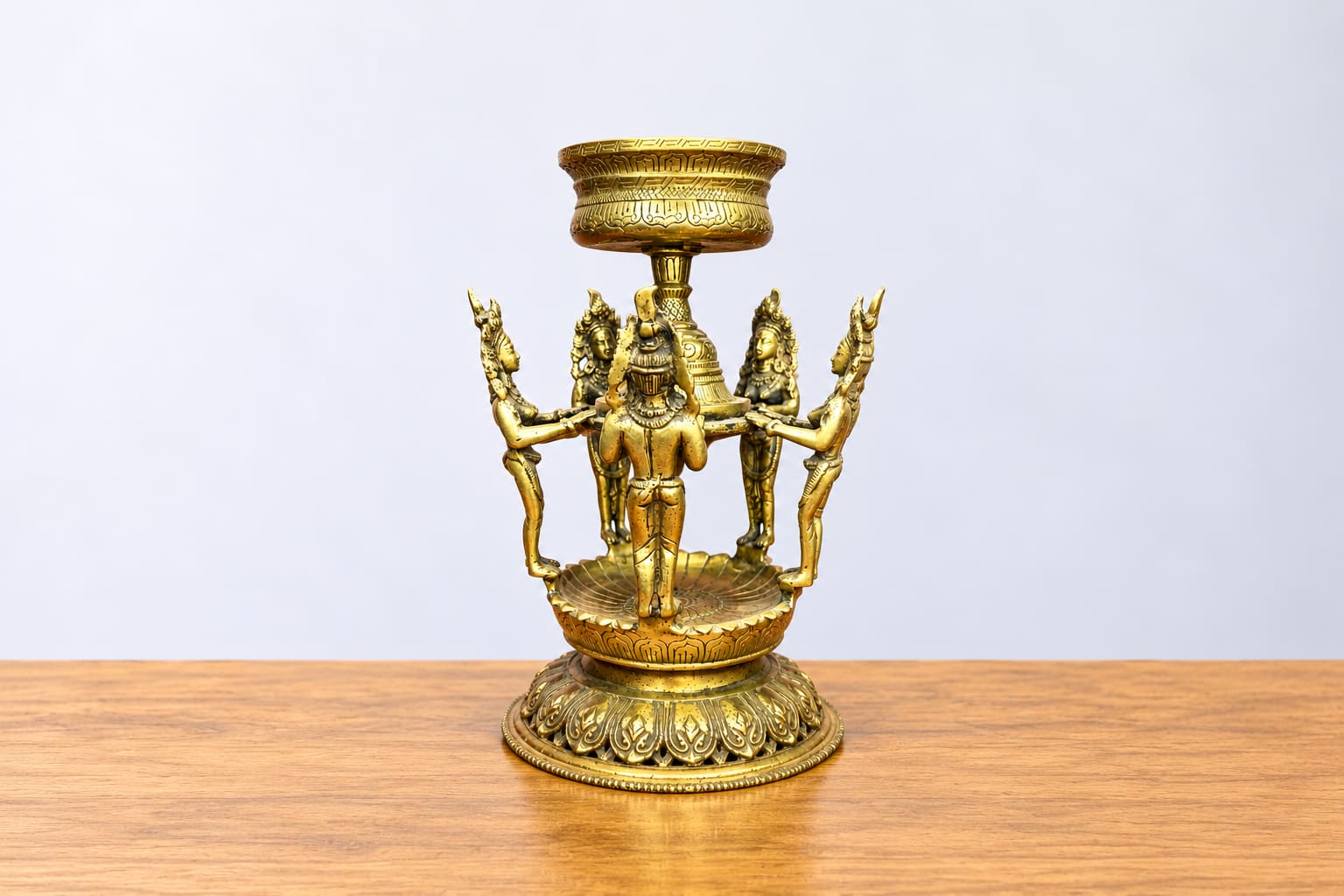
What a Butter Lamp Is and Where It Comes From
A butter lamp is a metal lamp with a cup that holds butter or oil and a wick that burns in it. It is used in Buddhist and Hindu worship across the Kathmandu Valley and the wider Himalayan region. The flame is offered at a shrine, an altar, or a doorway, in prayer, in memory of someone, or as a wish for the year ahead.
Traditionally the fuel was clarified butter, called ghee. In Tibetan Buddhist practice, butter from yak and dri (the female yak) was used where it was available, and the lamp is still called a butter lamp in Tibetan even when it holds oil. Today many people burn ghee, vegetable oil, or mustard oil, depending on what is easy to find.
The Kathmandu Valley has a long tradition of metal lamps made for shrines, courtyards, and homes. Bhaktapur, one of the valley's three old royal cities, is known for its metalwork, and brass and bronze lamps are part of that craft. You will see them in temple courtyards, on household altars, and beside doorways at festival time.
How it differs from a standard oil lamp
The two are close relatives, and the names overlap in everyday speech. The difference is mostly in the cup and the fuel the lamp is built for.
A butter lamp usually has a deeper, rounder cup, often raised on a stem. Butter and ghee are solid or soft at room temperature, so the cup has to hold a good amount of fuel as it melts around the wick. A standard oil lamp often has a shallow dish with a lip or spout where the wick rests. It is made for thin liquid oil and burns a smaller amount at a time.
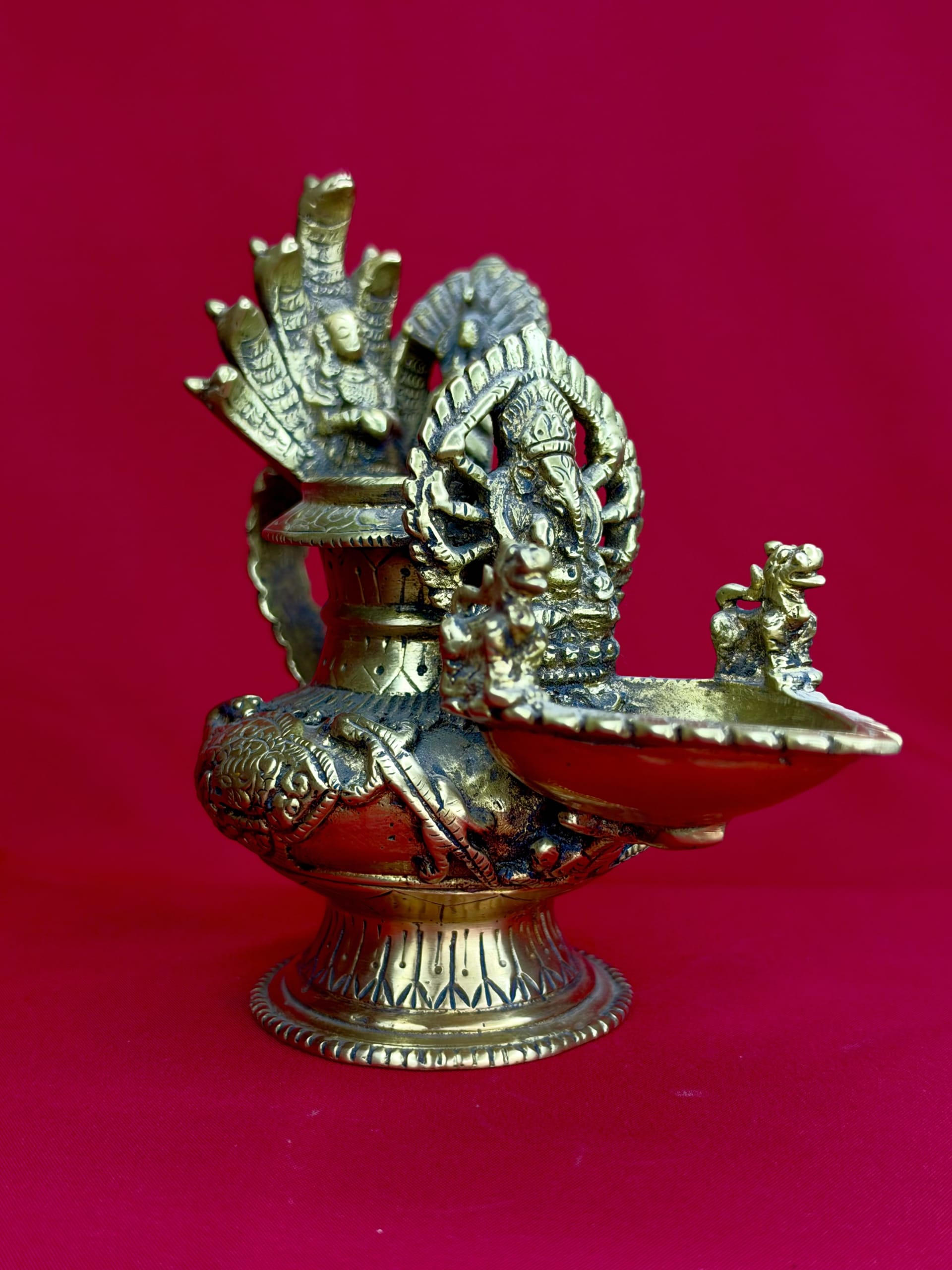
The sukunda above is a Nepali oil lamp with a shallow wick dish. See this piece: Sukunda with Serpent-Hood Handle. Our guide to the Nepali oil lamp tradition covers these lamps in more detail.
Reading the Design: Figurative Stands and Plain Dishes
Butter lamps come in a wide range of forms. At the two ends are the figurative lamp and the plain dish.
A figurative lamp has sculpted elements. One example is the lamp at the top of this page, where a ring of standing Tara figures holds up the cup on a stem above a lotus base. Lamps like this often have a tiered base and engraved bands as well. The cup is the working part, and the rest of the piece honors what the flame is offered to.
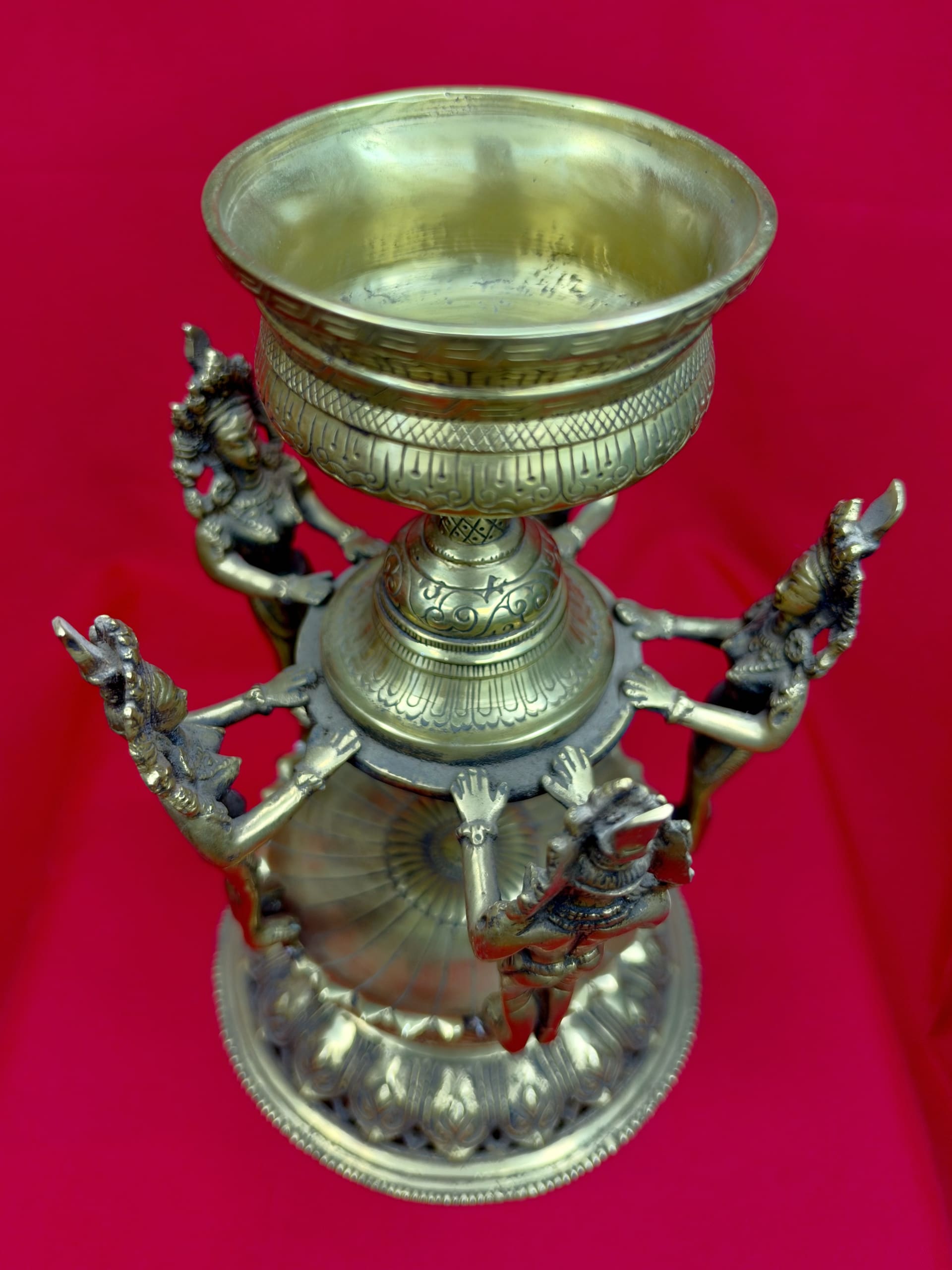
See this piece: Tara Butter Lamp. It is 10 in (25.4 cm) tall and weighs about 2.23 kg.
A plain dish is a simple metal cup, sometimes on a low foot. It has little ornament and is meant to be used, wiped, and used again.
Which one suits which place
A lamp with figures, a tiered base, and engraved bands is usually made for a shrine or a main altar. It stands in one place and is handled rarely. Its detail is part of its purpose, and it needs careful cleaning.
A plain dish suits a home altar, a doorway, or a windowsill. It can be moved, refilled, and washed without worry about fine detail.
Choose the design by asking two things:
- Where will the lamp stand?
- How often will it be picked up, refilled, and cleaned?
A figurative lamp that is lifted every day will show wear on its raised detail. A plain dish on a formal altar may look too bare for the space. Match the lamp to its job.
How Metal Butter Lamps Are Made
Most metal butter lamps start with casting, followed by finishing work by hand.
Lost-wax casting for figures and stands
Lost-wax casting is the method used to form figures, stands, and bases. The steps are:
- A model of the piece is shaped in wax.
- The model is covered in clay, which dries into a mold around the wax.
- The mold is heated so the wax melts and runs out, leaving an empty space in the shape of the model.
- Molten metal is poured into that space.
- Once the metal cools, the clay is broken away to reveal the casting.
The mold is broken to free the piece, so each casting is its own. Two lamps from the same design can differ in small ways.
Repoussé and engraving for surface detail
Repoussé is the technique of pushing metal into relief by hammering it from the back. On lamps it is often used for petals and raised bands around a cup or base. Engraving is different. A tool cuts lines directly into the surface, and it is used for fine patterns and edge details, like the bands on the cup of the Tara lamp.
Hand finishing changes the final piece
After casting, the piece is filed, scraped, and polished by hand. This removes casting marks and sharpens detail. It also removes a little metal.
That is why the final weight and height can vary slightly from one piece to the next. A lamp described as about 10 inches tall may measure a little more or less. If the exact size matters to you, ask for the measurement of the actual piece.
Symbols on Butter Lamps: Tara, Buddha, and Common Motifs
The figures and symbols on a lamp are not only decoration. They show what the lamp is dedicated to.
Tara figures are a common sight on butter lamps used in Buddhist practice. Tara is a female bodhisattva associated with compassion and with quick help for those in difficulty. Green Tara and White Tara are the forms most often named. A ring of Taras around the flame suits the lamp, since the lamp itself is an offering.
Buddha, Ganesh, and vajra motifs
A Buddha figure on a lamp stands for awakening and for the teacher who showed the path to it. In Buddhist practice, offering light is linked to clearing away ignorance.
Ganesh is the elephant-headed Hindu deity honored as the remover of obstacles. He is invoked at the start of a new venture, a journey, or a ritual. A lamp with Ganesh is more likely to be found in a Hindu home or shop. Our Ganesh statue guide explains how to read his forms.
The vajra is a ritual object that stands for indestructibility and clarity of mind in Buddhist practice. In Hindu tradition it is the thunderbolt weapon of Indra. On a lamp, a vajra may appear as a small motif on the base or on an engraved band.
Ask before assuming
Designs vary by workshop and tradition. A figure that looks like one deity to a newcomer may be another, and the same motif can carry slightly different meaning in different communities. Ask the seller what a motif represents before you assume, especially if the lamp is a gift or will stand on an altar.
How to Light and Use a Butter Lamp Safely
Lighting a butter lamp is simple. A few habits keep it safe.
Basic steps
- Fill the cup with ghee or oil. Leave a little room below the rim.
- Set the wick. A cotton wick is the usual choice. Let one end rest in the fuel and the other stand a little above the surface.
- Light the wick and let the flame settle. If the fuel is solid, such as ghee on a cold day, the wick may take a moment to draw.
- Trim the wick as it burns. A tall flame smokes and blackens the cup. A short, steady flame burns cleaner.
Choose a safe place
Keep the lamp on a stable surface that will not burn. Stone, metal, or a ceramic tile is better than a wooden shelf with a cloth cover. Keep it away from curtains, paper, and hanging cloth. Altars often have prayer flags, garlands, and offerings close by, and these catch fire easily.
Practical points
- Never leave a burning lamp unattended.
- Let the lamp cool before you move it. The cup and the metal around it stay hot for some time after the flame is out.
- Use a dish or tray beneath it to catch drips, especially if the lamp stands on wood or fabric.
- Keep it out of drafts, which make the flame flicker and can spread sparks.
- Keep children and pets away from it.
Never pour water on a burning lamp. Water on hot ghee or oil can make the burning fat spatter. Put the flame out with a snuffer or by covering the cup with a metal lid.
Caring for Brass and Bronze Butter Lamps at Home
Brass is an alloy of copper and zinc. Bronze is an alloy of copper and tin. Both darken over time, and a butter lamp collects soot and residue with use.
Cleaning the metal
Clean the metal with a soft cloth and mild soap in warm water. Wipe gently, then rinse and dry at once. Avoid abrasive pads and harsh scouring powders. They scratch the surface and leave fine marks in engraved detail that do not come out.
A soft brush, such as a clean old toothbrush, can reach into recesses on a figurative lamp. Work lightly. Many people prefer to keep a natural, aged look rather than a bright polish, and that is a matter of taste.
Removing old ghee or wax
Wait until the lamp is completely cool. Then soften the residue with warm water. Do not heat the cup over a flame to melt it out, since uneven heating can loosen joints or mark the finish. Do not scrape with knives or other sharp tools, since they cut into the metal.
Soak a cloth in warm water, press it against the residue, and wait. When the fat softens, lift it away with the cloth or a wooden stick.
Humidity and storage
Damp air speeds up tarnish and can leave green or dark spots on brass and bronze. Handling matters too, because oils from the skin leave marks. Wash and dry the lamp fully before putting it away. Store it in a dry place, wrapped in soft cloth, when it is not in use.
Choosing the Right Butter Lamp for Your Space
Start with size and weight. A figurative lamp of about 10 inches and over 2 kg, like the Tara Butter Lamp, suits a shelf or an altar. Its weight keeps it steady. A smaller dish fits a tight corner, a windowsill, or a narrow ledge.
Weight is a practical point as well as a visual one. A heavy lamp is harder to tip over, but it is also harder to carry for cleaning. Think about who will be lifting it and how often.
Daily worship or occasional display
Ask whether the lamp will be used daily or displayed now and then. This changes what you need from it.
A lamp used every day should be sturdy and easy to clean. A plain dish, or a lamp with a simple cup and few deep recesses, is the better fit. A lamp that is mostly for display can carry more detail, since it will not collect residue as fast.
Check the cup and the base
Check that the cup is deep enough for the fuel you intend to use. Ghee and butter need more depth than a thin oil. Check also that the base sits flat. A lamp that rocks on a flat surface is a risk once it is lit.
Questions to Ask Before You Buy
Photos show shape and finish, but they do not show weight, thickness, or the inside of the cup. Ask these questions before you decide:
- What is the exact height and weight of the piece?
- What metal is it: brass, bronze, or another alloy?
- Is it cast or stamped? Cast pieces are made in a mold and are usually heavier, with more depth in the detail. Stamped pieces are pressed from sheet metal and are thinner and lighter.
- Are the measurements approximate? Hand finishing means sizes can vary slightly.
- Can you see more photos, such as the inside of the cup, the base, and the back?
At Heritage Craft Center at Dattatraya Square in Bhaktapur, prices are given on request. You can browse the current oil lamps and butter lamps on the website, and message us on WhatsApp or contact the shop to ask about the height, weight, or price of any piece. If you are in Bhaktapur, it helps to hold a few lamps side by side, since the difference in weight is easiest to feel in the hand.
FAQ
What is the difference between a butter lamp and an oil lamp?
The difference is mainly in the cup and the fuel. A butter lamp usually has a deeper cup made to hold butter or ghee, which are solid or soft at room temperature. An oil lamp often has a shallower dish with a place for the wick, made for thin liquid oil. In daily speech the names overlap, and many lamps are used with either fuel.
Can a butter lamp be used with cooking oil instead of butter?
Yes. Many people burn vegetable oil, mustard oil, or ghee in a butter lamp. Ghee and refined oils burn cleaner than plain butter, which contains milk solids and water that can smoke and spatter. Do not use kerosene or other fuels made for other purposes.
How long does a metal butter lamp burn?
Burn time depends on the size of the cup, the amount of fuel, the wick, and the fuel itself. A small cup may burn for a few hours, while a larger one lasts longer. Test your own lamp with a measured amount of fuel. The metal near the cup gets hot enough to be unsafe to touch and stays warm after the flame is out.
Is a butter lamp suitable for daily use on a home altar?
Yes, if you choose a sturdy lamp with a steady base and a cup that is easy to clean. A plain dish is the practical option for daily use. A figurative lamp can also be used daily, but its engraved bands and raised details will collect soot and need gentler cleaning. Place it on a stable surface that will not burn, and never leave it burning unattended.
How do I clean old wax from a brass butter lamp without damaging it?
Let the lamp cool completely. Press a cloth soaked in warm water against the residue until it softens, then lift it away with the cloth or a wooden stick. Wash the metal with mild soap and a soft cloth, rinse, and dry it fully. Do not use direct heat, sharp tools, or abrasive pads, since they can mark the metal and the engraved detail.
Key Takeaways
- A butter lamp is a metal lamp with a deep cup for ghee or oil, used in worship across the Kathmandu Valley and the Himalayas.
- Choose between a figurative lamp for a shrine and a plain dish for everyday use, based on where it will stand and how often it is handled.
- Lost-wax casting, repoussé, engraving, and hand finishing shape each lamp, so measurements and weight can vary slightly.
- Light the lamp on a stable surface away from anything that burns, and never leave it unattended.
- Before buying, confirm the size, weight, metal, and price of the actual piece.